Coffee shops like ours offer many different single origins (and blends) at the same time. This is how we design our menu to (try to) help you understand and choose your favourite.
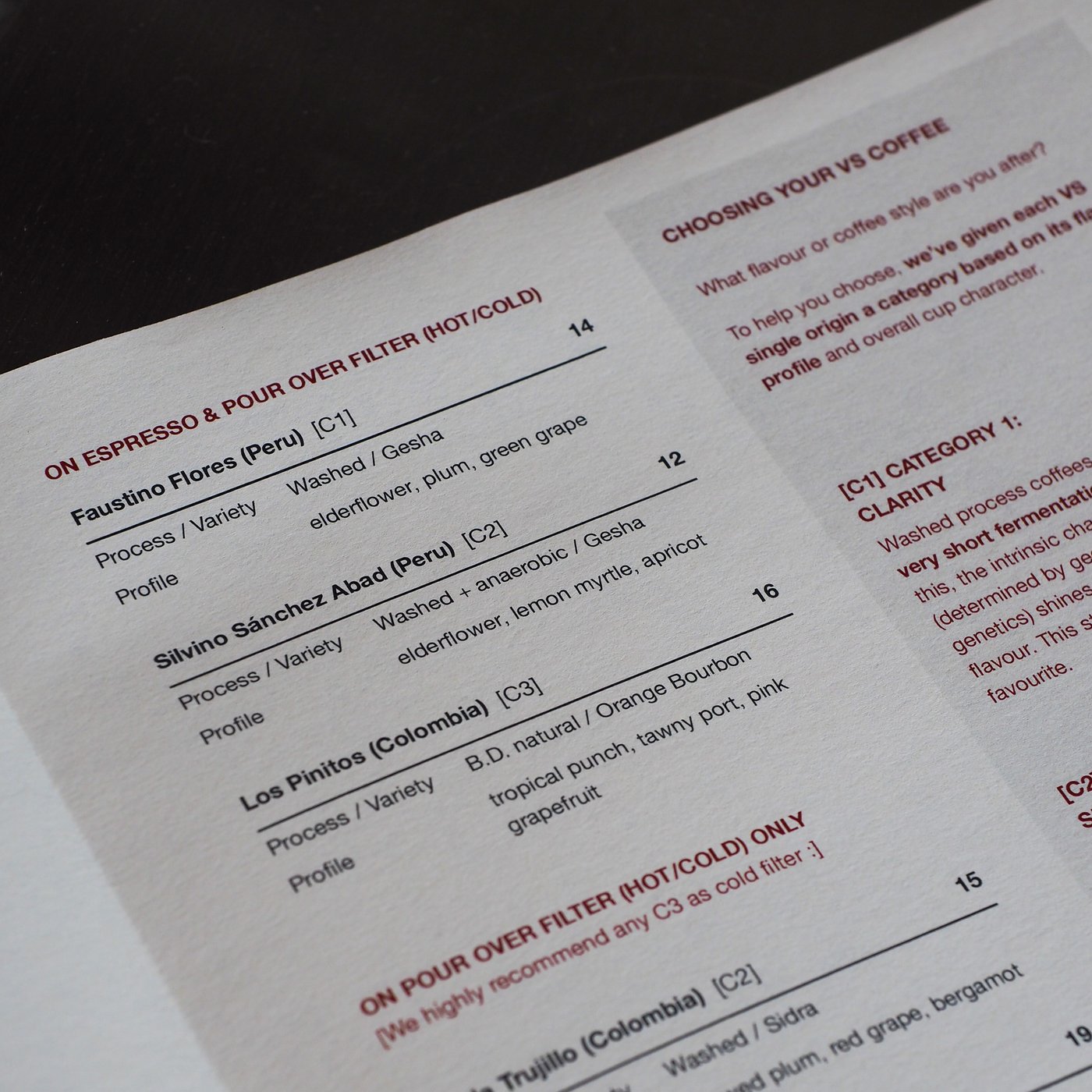
A photo of our VS menu at Marrickville
When you go to a bottle shop or a restaurant, you probably have an idea of how to navigate the wine section/menu. Most group them first by ‘colour’; then producer, variety, region, year, price…
Coffee roasters and specialised coffee shops, like ours, are in a similar situation: we offer a few different coffees at a time, each with their own technical and flavour characteristics. But there seems to be no standardised way to present them – each follows its own way.
In our shops, we have a ‘single origin of the day’ for our regular batch filter, espresso, and cold brew orders. Also, one house blend for milk coffees – either Pacemaker or Sweet Tooth (except in Marrickville, where we offer both, but thats another story/post). No choice fatigue in there.
Beyond these, we always offer 3 to 10 Very Special (VS) single origins – our premium tier – on pour over filter and espresso. Even if our staff can communicate them, we also list them on a menu so you can take the time to browse and choose.
When it comes down to designing this piece, we ask ourselves the following questions:
How do we present an extensive list of single origins (and blends) with clarity? And, ultimately, how do we help you choose a coffee and flavour that you will enjoy?
Initially, we just wrote the producer name, country, fermentation process, variety, and flavour notes, all lumped on one single page. This was usually enough for ‘coffee people’, who know what to expect in the cup just from that information. But it wasn’t so helpful for those getting started in this magical, endless rabbit hole of ‘specialty’ coffee…
Now, we’re trying a different approach. We’re giving each coffee a category based on its flavour profile or overall character (heavily influenced by the degree of impact of the fermentation process):
Category 1: Clarity
Washed process coffees typically go through a very short fermentation stage. Because of this, the intrinsic character of each lot (determined by geography, climate, plant variety, harvest) really shines through in the cup; we call this ‘clarity’ of flavour. This style is (unapologetically) our favourite. Our bread and butter, everyday, anytime.
Category 2: Slightly fruit-driven
‘Honey’, extended washed, and anaerobic washed processes generally involve a medium-length fermentation stage, with different degrees of technical complexity and skin/mucilage contact. The result is a cup with more intense and fruit-driven flavours, but we still find a degree of clarity in there…
Category 3: Candy-like & ferment-vibes
Natural, carbonic maceration, anaerobic natural, and some other experimental processes generally involve a long fermentation stage – sometimes, multiple steps that combine different and innovative methods. In the cup, the flavours are bold, candy-driven, even ‘boozy’. The impact of the fermentation takes centre stage, dominating the flavour and overall character.
See our Marrickville VS coffee menu
See our St Peters VS coffee menu
This is just our approach, right now. We’re sure there are many ways to go about this; there is no right or wrong. In fact, we’re still testing, changing, and improving this approach.
So, we would love to know about your own experience, or how you communicate coffee in your cafe. Are there any menu designs that are memorable for you? Do you prefer to chat with baristas, or take your time to read and reflect? Are there any other categories that may make more sense to you? Reach out via Instagram or email; we’re always keen to chat about this stuff.
And, next time you come to our shops, have a look at our VS menu. Or ask our lovely team. We’ll always do our best to make our coffees accessible (and enjoyed) by everyone – pro or beginner.