While both father Ajoy and son Pranoy Thipaiah are deeply involved in nearly every aspect of Kerehaklu Estate, each has naturally gravitated toward the areas where their experience and instincts best serve the farm.
Broadly speaking, Mr Ajoy oversees the plantation itself, focusing on plant health and overall agronomy, while Pranoy leads the post-harvest processing efforts.
The team at Osito (our importer for this coffee) say that it has been remarkable to watch Pranoy’s approach to processing evolve over the past four seasons. He’s deeply curious about how processing can add nuance and character to coffee, but he’s equally committed to allowing plant genetics and the native microbiome to remain the dominant forces shaping flavour.
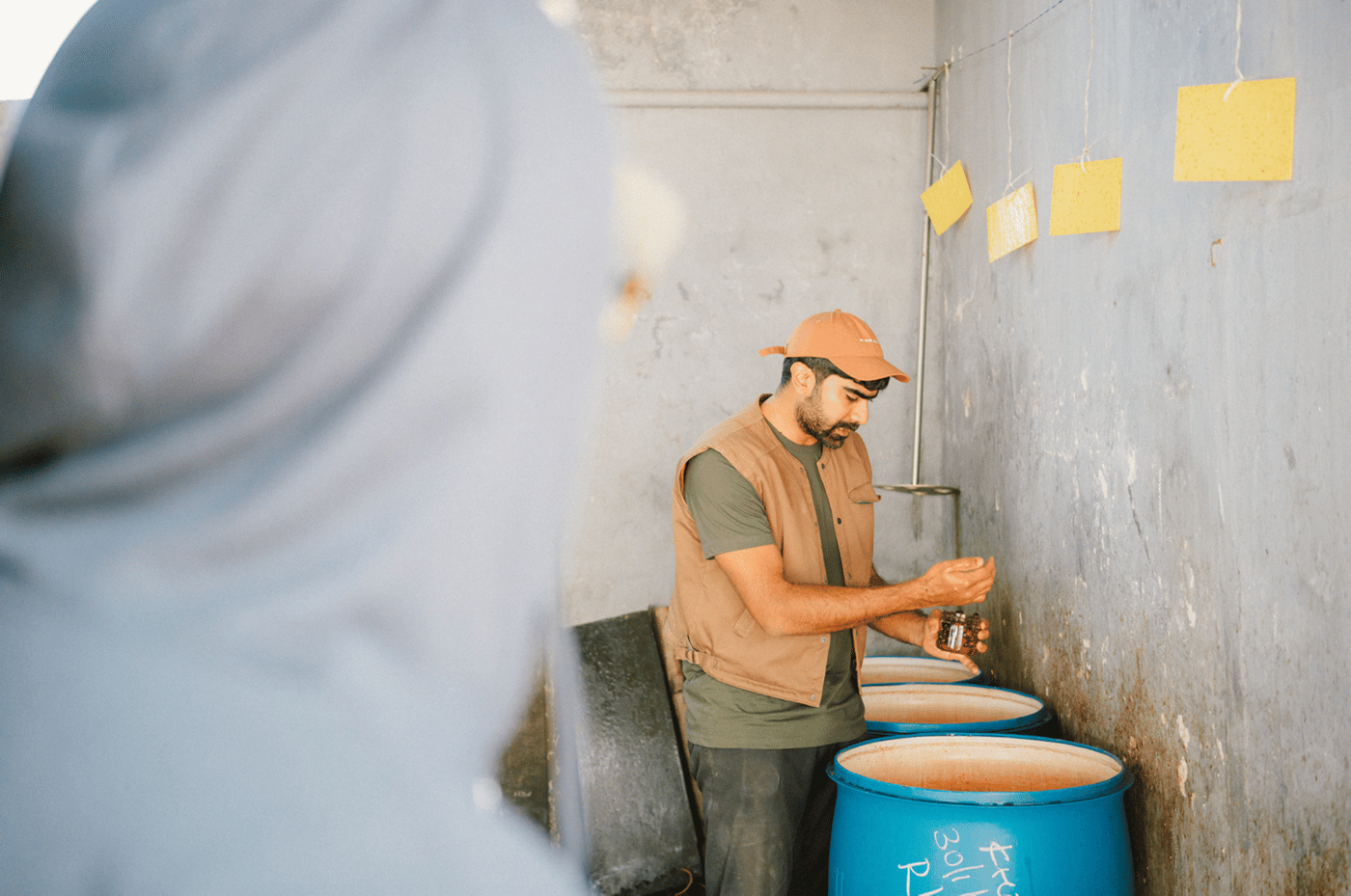
Pranoy Thipaiah in the coffee processing facilities
The variety
According to the Coffee Board of India, ‘Selection 9’ “is a derivative of a cross between an Ethiopian Arabica collection, ‘Tafarikela’, and ‘Hybrido-de-Timor’. Sln.9 has inherited all the superior cup quality traits of Tafarikela. This variety has won the Fine Cup Award for best Arabica at the ‘Flavour of India - Cupping Competition 2002’ organised by Coffee Board of India.”
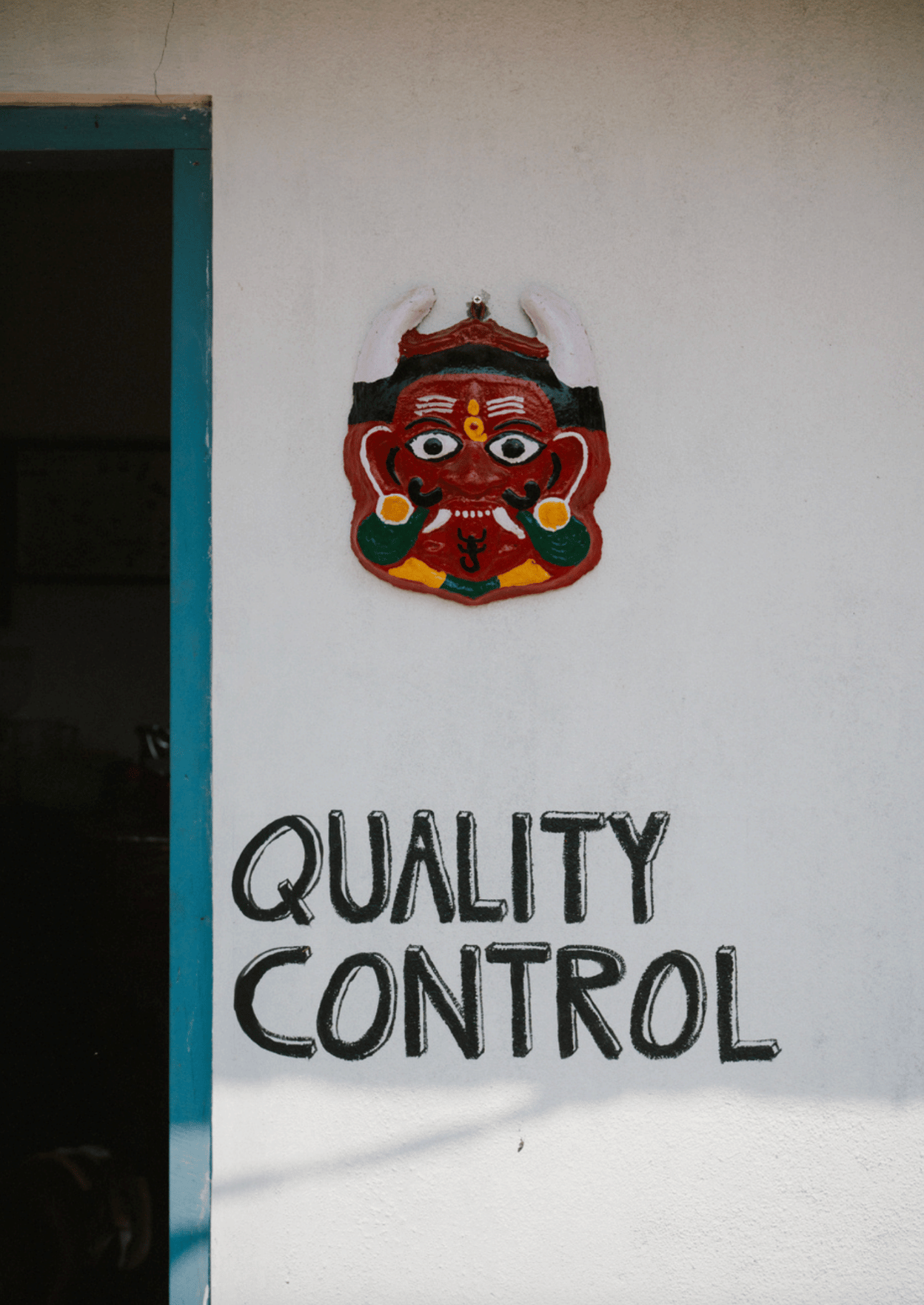
A photograph of the quality control room in Kerehaklu
The process
Pranoy’s method has an analogue in sourdough bread. He creates a starter culture using Parchment coffee and mucilage. The native yeasts and bacteria on the fruit activate within this mixture, which is then cultivated into a vibrant starter culture used to inoculate fermentations.
A typical Kerehaklu lot is processed as follows:
- The coffee cherries are floated the same day they’re picked.
- The cherries ferment in open-air tanks from about 6:00 PM to 9:00 AM the next morning.
- The cherries are pulped and moved to lidded plastic barrels with fresh water and a specific measured amount of starter culture.
- The cherries are stirred every few hours to add oxygen and keep fermentation uniform.
- After 35-37 hours, the cherries are mechanically washed.
- Drying starts under heavy shade for 2 days, then everything moves to a polyhouse.
For this sequentially fermented lactic washed lot, the pH was allowed to reach a level that encouraged Lactobacillus to proliferate and lactic acid to build up.